
On Page SEO Guide for Beginners: Complete Informational Guide
Search engines rely on structured and optimized content to understand web pages. On page SEO is the process of optimizing elements within a webpage so search engines can easily understand the content and rank it in relevant search results. Unlike off-page techniques that depend on backlinks or external signals, on page SEO focuses entirely on improvements made directly inside a webpage.
When implemented correctly, improves content clarity, increases visibility in search engines, and helps users find the information they are searching for. Websites that follow proper on page SEO practices usually perform better in organic search results because search engines can easily analyze and categorize their content.
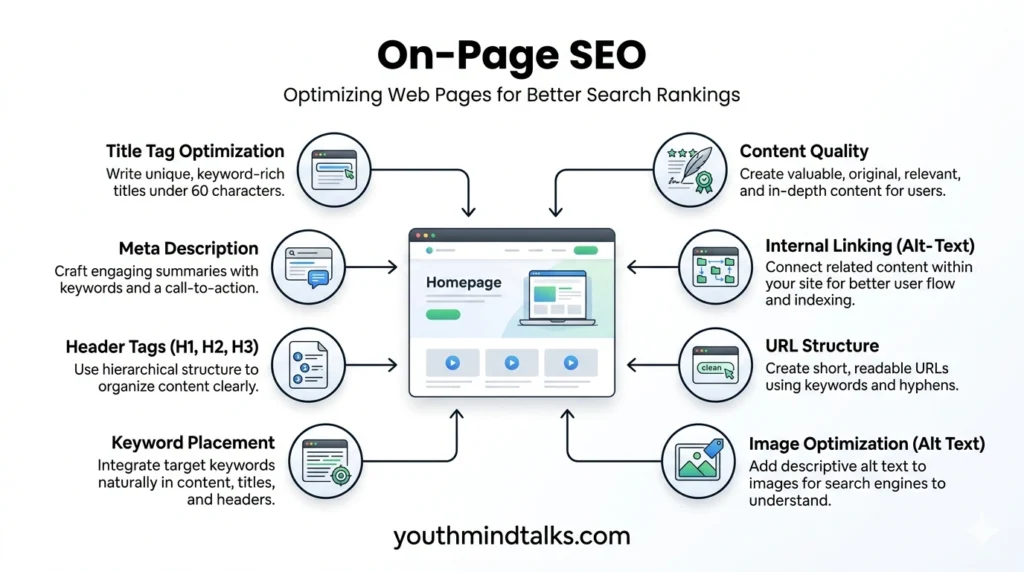
Understanding the Core Concept of On Page SEO
The main purpose of on page SEO is to make a webpage clear and organized for both users and search engines. Search engines analyze several signals such as keyword placement, headings, images, and internal links to determine whether a page is relevant to a specific search query.
The following table shows the primary components that influence.
| On Page SEO Element | Purpose |
|---|---|
| Focus Keywords | Identify the main topic of the page |
| Keyword Density | Ensure balanced keyword usage |
| Header Tags | Organize content structure |
| Snippet Optimization | Improve visibility in search results |
| Image Optimisation | Help search engines understand images |
| Internal Linking | Connect related pages |
| Keyword Cannibalization | Prevent competing pages targeting same keyword |
Each of these elements contributes to a strong on page SEO foundation.
Focus Keywords in On Page SEO
Focus keywords represent the primary search term a page intends to rank for. In on page SEO, selecting the right focus keyword is essential because it helps search engines understand the main topic of the page.
For example, if a blog explains how to optimize website content, the focus keyword could be on page SEO.
Focus keywords should appear in strategic locations such as:
- Page title
- Header tags
- URL structure
- Image alt text
- Content body
Proper keyword placement improves SEO because search engines rely on these signals to interpret page relevance.
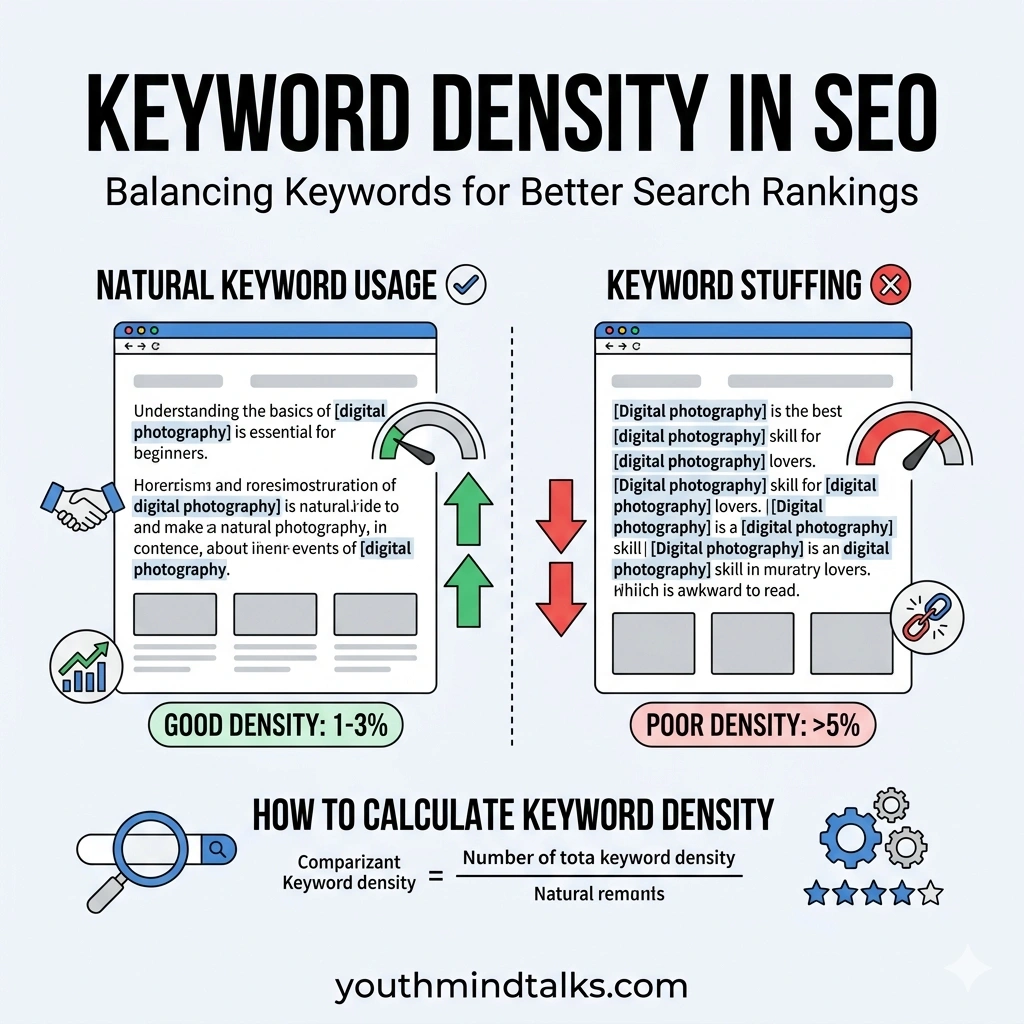
Keyword Density and Its Role in On Page SEO
Keyword density refers to the number of times a keyword appears within the total content. Maintaining balanced keyword density is an important part of on page SEO because it helps search engines recognize the topic without appearing spammy.
Example:
| Total Words | Keyword Frequency | Density |
|---|---|---|
| 1000 words | 30 uses | 3% |
Maintaining natural keyword usage ensures that on page SEO remains effective without harming readability. Overusing keywords can lead to keyword stuffing, which negatively impacts and may reduce search rankings.
Using Header Tags to Improve On Page SEO
Header tags help structure content so readers and search engines can easily navigate the page. Proper use of header tags significantly improves on page SEO because it organizes information into logical sections.
Header tags are structured as follows:
| Header Tag | Purpose |
|---|---|
| H1 | Main title of the page |
| H2 | Major sections |
| H3 | Subsections |
| H4–H6 | Supporting sections |
Example structure:
H1: On Page SEO Guide
H2: Keyword Density
H2: Image Optimisation
H3: Image File Naming
Search engines rely on this hierarchy to understand how information is organized, which strengthens on page SEO.
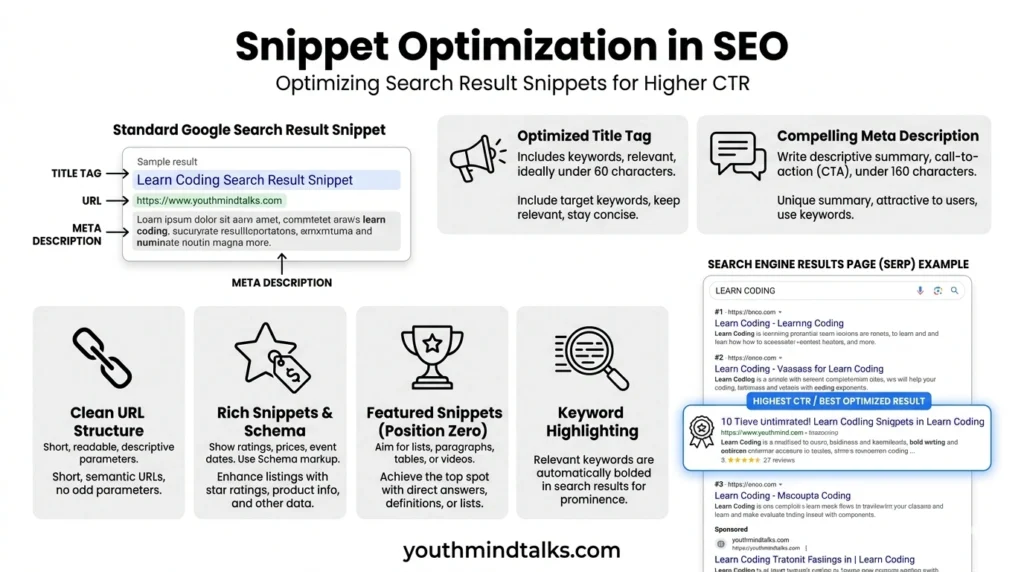
Snippet Optimization in On Page SEO
A snippet is the short preview of a webpage that appears in search engine results. It usually contains a page title, URL, and meta description. Optimizing this preview helps improve click-through rates and supports on page SEO.
Example snippet structure:
| Element | Description |
|---|---|
| Title | Page heading shown in search results |
| Meta Description | Summary of the webpage |
| URL | Webpage address |
When snippets clearly describe the content, users are more likely to click on the result. This increased engagement indirectly improves performance.
Image Optimisation in On Page SEO
Images also play an important role in on page SEO when they are properly optimized. Search engines cannot interpret images directly, so they rely on supporting information such as file names and alt text.
Important image optimization practices include:
| Optimization Factor | Example |
|---|---|
| Image File Name | on-page-seo-guide.jpg |
| Alt Text | on page seo optimization example |
| Image Size | Compressed for fast loading |
Example comparison:
Poor image name:
IMG00456.jpg
Optimized image name:
on-page-seo-example.jpg
Proper image optimization improves page loading speed and contributes to better .
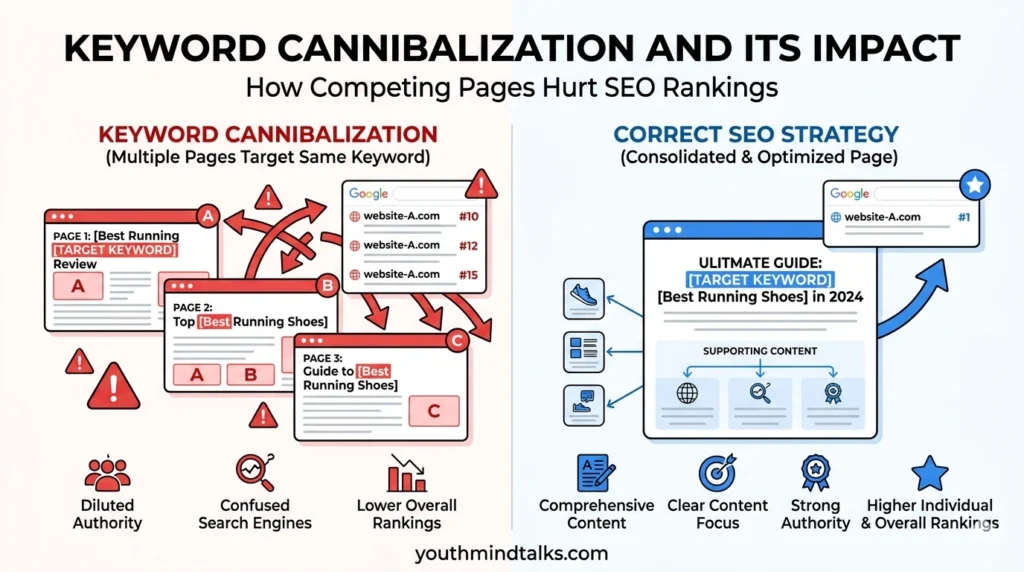
Keyword Cannibalization and Its Impact
Keyword cannibalization occurs when multiple pages on a website target the same keyword. This can confuse search engines and weaken on page SEO performance because the pages compete with each other for rankings.
Example:
| Page | Target Keyword |
|---|---|
| Blog Post A | on page seo |
| Blog Post B | on page seo |
In this situation, search engines may struggle to determine which page should rank. Preventing keyword cannibalization is an important step in maintaining strong on page SEO.
Solutions include:
- Assigning different keywords to different pages
- Creating topic clusters
- Combining similar articles into one comprehensive page
Anchor Text and Internal Linking
Internal linking connects different pages within a website. Anchor text refers to the clickable words used in these links.
Example:
| Anchor Text | Destination Page |
|---|---|
| on page seo checklist | SEO optimization guide |
Example sentence:
Learn more about on page SEO strategies in our advanced SEO tutorial.
Internal linking supports on page SEO by helping search engines crawl pages efficiently and distribute authority across the website.
On Page SEO Checklist
A structured checklist helps ensure that every important factor is implemented correctly.
| Task | Optimization Method |
|---|---|
| Focus Keyword Placement | Include keyword in title and headings |
| Content Structure | Use H1, H2, and H3 headings |
| Snippet Optimization | Write clear meta descriptions |
| Image Optimisation | Add descriptive alt text |
| Internal Linking | Use relevant anchor text |
| Keyword Targeting | Avoid keyword cannibalization |
Following these steps ensures consistent improvement.
Conclusion
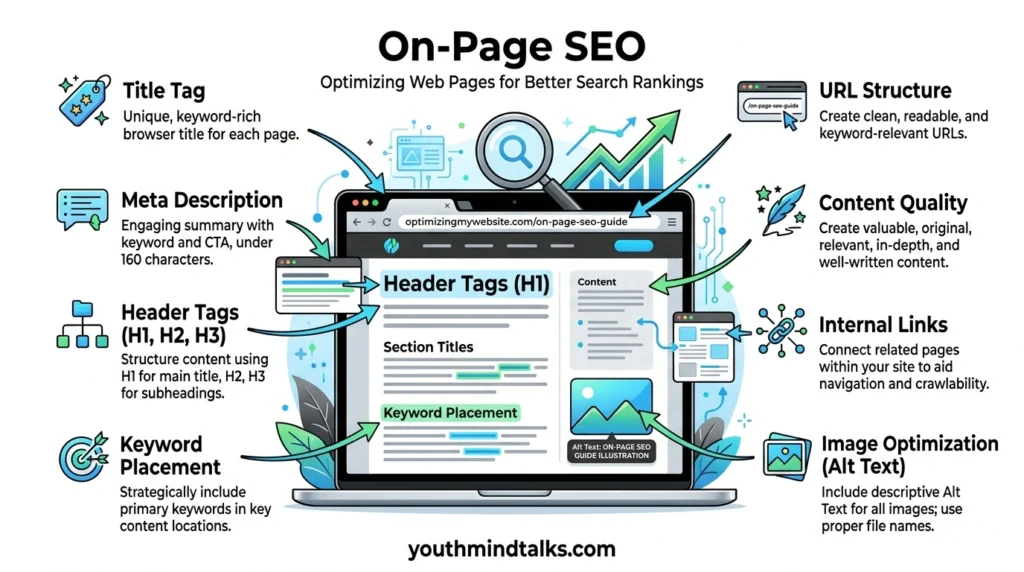
On page SEO is a critical component of search engine optimization because it directly influences how search engines understand webpage content. By optimizing focus keywords, maintaining proper keyword density, structuring content with header tags, improving snippets, and implementing image optimisation and internal linking, websites can significantly improve their chances of ranking in search results.
A well-structured on page SEO strategy ensures that content is organized, relevant, and easy for both users and search engines to understand. When these techniques are applied consistently, helps increase organic traffic, improve search visibility, and strengthen the overall performance of a website.